Kids Need Full CPR Protocol
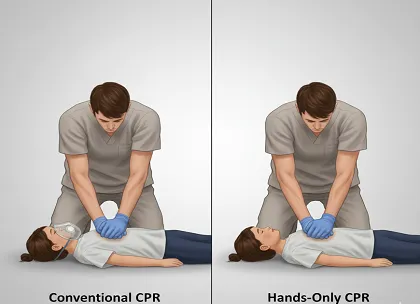
Sudden cardiac arrest strikes kids rarely but kills fast. Survivors often suffer brain damage. Bystanders face tough choices on resuscitation methods. Hands-only chest compression (HCPR) simplifies adult CPR. Standard CPR (CCPR) adds breaths. A review published in the Cardiology Journal compares them in children.
PRISMA Search Finds Key Trials
Researchers followed PRISMA rules strictly. They searched PubMed, Cochrane Library, and Embase for trials pitting HCPR against CCPR in kids. Random effects meta-analysis pooled odds ratios for prehospital ROSC, 1-month survival, and good brain outcomes. Subgroups split by arrest cause and age.
Standard CPR Saves More Lives
Prehospital ROSC rates matched between HCPR and CCPR overall. Subgroups by arrest cause showed no differences. One-month survival favored CCPR at 18.0% versus 12.3% for HCPR. The p-value hit 0.04 showing clear edge. HCPR worked worse in non-cardiac arrests and kids over age one.
Brain Outcomes Favor CCPR Too
Favorable neurological outcomes at one month reached 9.0% with CCPR but only 6.3% with HCPR. The p-value dropped under 0.001 confirming superiority. Trends held across non-cardiac cases and age groups consistently.
Train Bystanders for Kids Differently
Hands-only CPR fails kids on survival and brain function versus standard method. Guidelines must stress full protocol for pediatrics.
Push CCPR Training Everywhere
Parents, schools, and coaches need kid-specific CPR skills now. HCPR alone risks worse outcomes.
Rescuers Must Add Rescue Breaths
This meta-analysis proves chest-compression-only resuscitation delivers lower one-month survival rates of 12.3% compared to 18.0% achieved with conventional CPR including rescue breaths in pediatric cardiac arrest cases. Neurological outcomes suffer too, with only 6.3% favorable results for HCPR against 9.0% for CCPR, carrying statistical significance at p<0.001 across key subgroups. Prehospital return of spontaneous circulation shows no advantage for either approach regardless of cardiac arrest etiology. Hands-only methods prove less effective particularly in non-cardiac arrests and children over one year old, highlighting critical differences from adult resuscitation protocols. Emergency responders, parents, and community trainers should prioritize comprehensive pediatric CPR education emphasizing ventilations alongside compressions to maximize survival and preserve neurological function effectively.
Featured
Off
Page Content
#ffffff
Anonymous user
On
Authenticated user
On
Premium
On
Paid / Sponsored
On
Key highlights
- Researchers conducted systematic searches across PubMed, Cochrane Library, and Embase databases following PRISMA guidelines to identify trials comparing hands-only chest compression resuscitation with conventional CPR in pediatric cardiac arrest cases.
- Prehospital return of spontaneous circulation rates showed no significant differences between hands-only CPR and conventional CPR groups, including subgroup analyses based on underlying cause of cardiac arrest.
- One-month survival rates reached 12.3% among patients receiving hands-only CPR compared to 18.0% for those receiving conventional CPR, demonstrating statistical significance with a p-value of 0.04.
- Favorable neurological outcomes at one month occurred in 6.3% of hands-only CPR cases versus 9.0% of conventional CPR cases, with highly significant differences confirmed at p<0.001 across subgroups.
- Hands-only CPR demonstrated reduced effectiveness specifically in non-cardiac arrest scenarios and among children over one year of age when compared directly to standard CPR protocols.
Source
Kietlińska M, Krawczyk A, Witkowski G, et al. Conventional versus hands-only cardiopulmonary resuscitation by bystanders for pediatrics with out-of-hospital cardiac arrest: A systematic review and meta-analysis. Cardiology Journal. 2025;32(6):579-587. doi: https://doi.org/10.5603/cj.104135
Thumbnail
Speciality
Currency
Sub Speciality
Sub Sub Speciality
Short Description
Meta-analysis shows pediatric HCPR yields 12.3% 1-month survival vs 18.0% CCPR (p=0.04) and 6.3% favorable neuro outcomes vs 9.0% (p<0.001).
User Segments
Release Date
Featured Order
0
Is Paid
0
Send Notification
Off