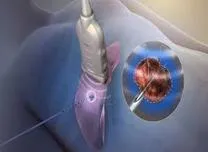
Pulsed-field ablation is increasingly used for atrial fibrillation due to its tissue-selective electroporation and safety profile. Data presented at the European Society of Cardiology Congress 2025 evaluated hemolysis biomarkers in 175 patients undergoing pulmonary vein isolation with three different pulsed-field ablation systems: a pentaspline catheter-system, a loop catheter-system, and a variable-loop circular catheter.
Post-procedure measurements demonstrated that the pentaspline system was associated with significantly higher total bilirubin, indirect bilirubin, and lactate dehydrogenase, along with lower haptoglobin, compared to the loop system. No significant differences were observed between the pentaspline and variable-loop circular systems or between the loop and variable-loop circular systems. Baseline biomarker levels were comparable across groups.
These findings suggest that device selection influences hemolysis during pulsed-field ablation, which may affect patient safety regarding anemia and kidney function. Further research is needed to validate these results and clarify clinical consequences.