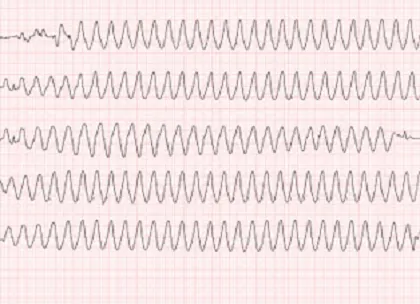
Patients with heart failure with reduced ejection fraction (HFrEF) remain at substantial risk for ventricular arrhythmias despite optimized guideline-directed medical therapy (GDMT). An observational longitudinal analysis presented at Heart Failure 2026 evaluated whether vericiguat affects ventricular arrhythmia burden in patients with HFrEF and whether responses differ according to baseline NT-proBNP levels or structural remodeling.
The study included 71 patients with HFrEF and implantable cardioverter-defibrillators (ICDs) receiving optimized GDMT. Ventricular arrhythmia burden, expressed as episodes per patient-month, was assessed during the 6 months before and after vericiguat initiation and included sustained and non-sustained ventricular tachycardia, ventricular fibrillation, anti-tachycardia pacing, and ICD shocks.
Findings
- No significant reduction in ventricular arrhythmia burden was observed in the overall cohort (p = 0.10).
- A significant interaction was observed between vericiguat treatment and baseline NT-proBNP levels (F = 5.12; p = 0.027).
- Post-hoc analysis showed lower ventricular arrhythmia burden among patients with NT-proBNP below 4000 pg/mL (p < 0.01).
- No significant interaction was observed between arrhythmic response and structural remodeling assessed by LVEF improvement (F = 0.09; p = 0.77).
- Lower ventricular arrhythmia burden with vericiguat appeared independent of LVEF improvement.
In this observational analysis of patients with HFrEF and ICDs, vericiguat was associated with lower ventricular arrhythmia burden primarily among patients with lower NT-proBNP levels.