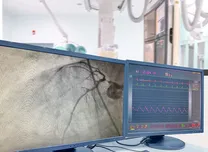
Extremely high CAC scores do not provide enough diagnostic certainty to warrant invasive angiography on their own. A large prospective study, published in the International Journal of Cardiology, assessed whether CAC thresholds above 1000 and 2000 Agatston Units could accurately predict obstructive coronary artery disease (oCAD) in routine clinical settings.
The study included 300 adults referred for coronary angiography between January 2020 and December 2022 because of elevated CAC scores. Participants were predominantly male (81%) with a mean age of 68.9 years, and 24% reported symptoms. The average pre-test probability of disease, determined using the Risk Factor–Clinical Likelihood model, was 0.20 ± 0.07.
Obstructive coronary artery disease was found in 42% of patients, and 38% required revascularization. For CAC levels above 1000 AU, specificity and positive predictive value (PPV) were 40% and 50%, respectively (95% CI, 44–57). When CAC exceeded 2000 AU, specificity rose to 86%, and PPV reached 66% (95% CI, 54–75). Despite these improvements, no threshold achieved the 85% accuracy needed for angiography to stand alone as a diagnostic approach.
Multivariate analysis confirmed very high CAC scores as strong modulators of oCAD risk, with odds ratios of 2.7 for ≥1000 AU and 3.6 for ≥2000 AU. However, the data indicate that even extreme calcium levels cannot reliably identify obstructive disease without complementary anatomical or functional testing.
The findings emphasize that CAC should be used to refine pre-test probability and select appropriate non-invasive imaging rather than determine angiography by itself.