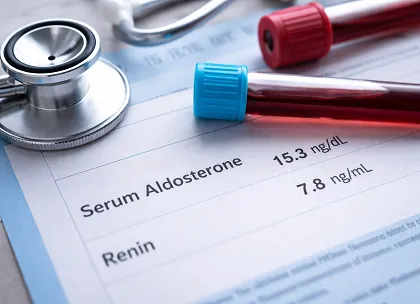
Higher aldosterone-renin ratio may be associated with increased atrial fibrillation and ischemic stroke events in older adults. A prospective cohort analysis published in JAMA Cardiology evaluated associations between aldosterone measures and incident cardiovascular disease among 3,477 community-dwelling participants from the Atherosclerosis Risk in Communities (ARIC) study without prior cardiovascular disease.
Participants were drawn from ARIC visit 5 (2011–2013). Participants with prior heart failure, myocardial infarction, or stroke, as well as those receiving potassium-sparing diuretics, were excluded. Serum aldosterone and renin levels were measured to calculate the aldosterone–renin ratio (ARR). Associations between aldosterone measures and cardiovascular outcomes were evaluated using Cox proportional hazards models. The primary outcomes included incident heart failure (HF) hospitalization, atrial fibrillation, ischemic stroke, myocardial infarction (MI), and a composite outcome including these events and all-cause mortality.
The mean age of participants was 74.8 ± 4.9 years, and 61.5% were women. Median aldosterone level was 5.1 ng/dL, renin activity 0.78 ng/mL per hour, and ARR 5.9. Over a median follow-up of 9 years, higher ARR was associated with a higher incidence of the composite outcome (adjusted hazard ratio [aHR] 1.04 per doubling; 95% CI 1.01–1.08). Higher ARR was also associated with increased risk of AF (aHR 1.10; 95% CI 1.05–1.15) and ischemic stroke (aHR 1.13; 95% CI 1.02–1.26).
No significant associations were observed for HF hospitalization or MI.
Higher ARR was independently associated with incident atrial fibrillation and ischemic stroke in this older community-based population.