Whether neurological risks associated with dysglycemia begin before the onset of type 2 diabetes mellitus (T2DM) remains an important clinical question. A UK Biobank analysis published in the European Journal of Preventive Cardiology evaluated associations between prediabetes, incident dementia, stroke, and structural brain imaging markers.
The study included 432,887 adults free of dementia and stroke at baseline, categorized by glycemic status as normoglycemia, prediabetes, or T2DM. Incident neurological outcomes were assessed during a median follow-up of 13.7 years, while a subgroup underwent brain magnetic resonance imaging (MRI) evaluation for gray matter volume, hippocampal volume, and white matter hyperintensity burden. Mendelian randomization analyses were also performed to assess potential causal effects of glycemia on neurological outcomes.
Findings
- Among 52,693 participants with prediabetes, vascular dementia risk was higher compared with normoglycemia (HR 1.36; 95% CI 1.14-1.61).
- Prediabetes was also associated with increased risks of stroke (HR 1.09; 95% CI 1.01-1.16), ischemic stroke (HR 1.10; 95% CI 1.02-1.19), and intracerebral hemorrhage (HR 1.19; 95% CI 1.01–1.39).
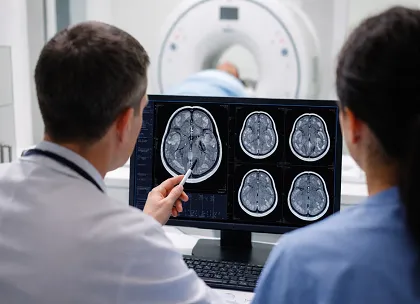
- In the MRI cohort of 39,996 participants, prediabetes was associated with smaller gray matter volume (β = −0.04; 95% CI −0.07 to −0.01), smaller hippocampal volume (β = −0.03; 95% CI −0.06 to 0.00), and greater white matter hyperintensity burden (β = 0.04; 95% CI 0.01-0.07).
- Spline analyses showed that adverse neurological associations emerged at HbA1c levels below the diagnostic threshold for T2DM, with risks further elevated in established T2DM.
- Mendelian randomization analyses supported potential causal effects of glycemia on dementia, stroke, and hippocampal atrophy.
The analysis showed that prediabetes was associated with higher risks of vascular dementia, stroke, and adverse brain MRI markers, with associations emerging below current diagnostic thresholds for T2DM.