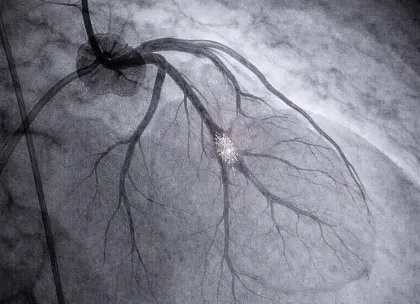
Risk stratification at the time of percutaneous coronary intervention (PCI) remains central to identifying patients with chronic coronary syndrome (CCS) at higher risk of recurrent ischemic events. In a retrospective cohort study published in EuroIntervention, the prevalence and prognostic relevance of guideline-defined high ischemic risk (HIR) criteria were evaluated in 15,336 patients with CCS treated with drug-eluting stents at Mount Sinai Hospital between 2012 and 2022.
HIR status was defined according to the 2024 European Society of Cardiology (ESC) CCS guidelines and included left main stenting, stent length >60 mm, diabetes mellitus, chronic kidney disease (CKD), bifurcation lesions, and chronic total occlusion (CTO). Overall, 71.4% of patients (n=10,952) met at least one HIR criterion.
Multivariable Cox regression showed that HIR status was associated with major adverse cardiac and cerebrovascular events (MACCE), defined as death, myocardial infarction (MI), or stroke.
Most individual HIR components were associated with MACCE, except bifurcation and CTO. Increasing numbers of HIR criteria were associated with higher rates of MACCE (p for trend <0.001), as well as death (p for trend <0.001) and MI (p for trend <0.001).
HIR criteria were frequently present and were associated with adverse cardiovascular outcomes, while their high prevalence may limit their ability to distinguish risk at the time of PCI.