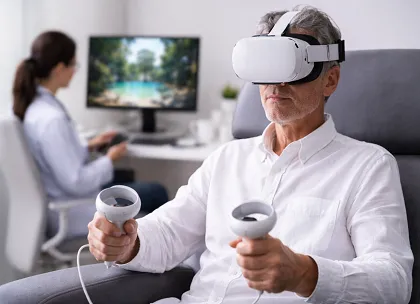
Limited participation in conventional cardiac rehabilitation remains a persistent challenge in heart failure (HF), particularly among older adults with functional limitations. Virtual reality (VR)–based approaches have been explored as a way to improve engagement and support home-based activity. A systematic review published in Journal of Medical Internet Research synthesized evidence on VR interventions in adults with HF.
A comprehensive search of PubMed, CINAHL, Embase, and Scopus identified randomized controlled trials (RCTs) and non-RCT interventional studies published within the past 10 years. Eligible studies included adults with HF undergoing VR-based interventions and reporting outcomes such as physical activity, exercise capacity, psychological well-being, self-management, or QOL. Risk of bias was assessed using the Cochrane Risk of Bias 2 (RoB 2) tool for RCTs and the Risk Of Bias In Non-randomized Studies of Interventions (ROBINS-I) tool for non-RCTs, following PRISMA 2020 and PRISMA-S guidelines.
Ten studies met inclusion criteria, including 7 RCTs and 3 non-RCTs, largely involving older adults (mean age ≥65 years). Most interventions were home-based, with exergaming as the predominant modality, followed by immersive VR cycling and digital coaching, delivered over 4–12 weeks.
Improvements in exercise capacity were reported in 60% of studies, physical activity in 50%, and QOL in 40%. Reductions in depressive symptoms were reported in 30% of studies, while effects on anxiety and self-efficacy were inconsistent. Adherence and usability were high, with no reported intervention-related adverse events.
Overall, VR-based interventions were associated with improvements in several rehabilitation-related outcomes in HF. However, heterogeneity in intervention design and outcome measures, small sample sizes, and risk of bias limit the certainty of evidence.