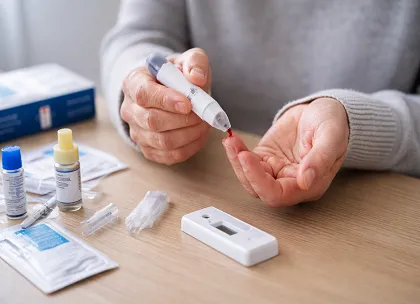
In a 9-month pilot initiative, the Danish Diabetes Association mailed 8,000 free capillary at-home self-sampling HbA1c tests to individuals aged 50–75 years who had not undergone HbA1c testing within the previous two years. The study published in the BMJ Open Diabetes Research and Care assessed feasibility and cost-effectiveness of this targeted screening approach.
Approximately 38% returned a blood sample (2913 individuals). Among respondents, 1.7% (50/2913) had HbA1c ≥48 mmol/mol (6.5%), meeting the diagnostic threshold for type 2 diabetes. Screening costs per screen-detected case were €1183. Based on Danish simulation modeling, advancing diagnosis by three years was estimated to reduce healthcare costs and productivity losses by €1514 per screen-detected case, yielding a social return ratio of 1.28 (€1514/€1183).
The analysis assumed constant HbA1c and other risk factors during the prediagnosis period and did not include certain municipal costs or non-pecuniary quality-of-life effects. Conversely, assumptions regarding post-diagnosis HbA1c reduction and exclusion of some treatment costs may influence estimated savings.
Targeted at-home HbA1c screening in adults aged 50–75 years without recent testing was feasible in this Danish setting. Cost-effectiveness estimates suggest potential economic benefit, although findings depend on modeling assumptions and require broader evaluation.