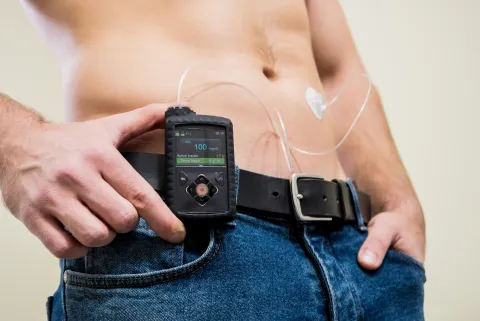
Glycemic management in individuals with type 1 diabetes mellitus (T1DM) complicated by gastroparesis remains clinically challenging due to delayed gastric emptying and unpredictable glucose excursions. A retrospective observational cohort study published in Diabetes, Obesity and Metabolism evaluated real-world outcomes following initiation of automated hybrid closed loop (HCL) insulin delivery in this population.
Among 1,827 clinic attendees, 36 adults with gastroparesis were identified, and 17 initiated HCL therapy. Baseline characteristics and glycemic metrics were comparable between HCL and non-HCL groups. In the HCL group, mean (SD) HbA1c was 70 (21) mmol/mol [8.6 (1.9)%], compared with 71 (25) mmol/mol [8.6 (2.3)%] in the non-HCL group (p = 0.73). Baseline time in range (TIR) was 36.8 (21.9)% versus 37.1 (19.2)%.
After HCL initiation, median (IQR) HbA1c decreased to 57 (52.5-65.0) mmol/mol [7.4 (7.0-8.1)%] (p < 0.001). TIR increased to 55.7 (19.9)% (p < 0.001). Time above range Level 2 (>13.9 mmol/L/>250 mg/dL) declined from 32.7% to 14.5% (p = 0.014). The Gold score improved from 2.5 to 1.5 (p = 0.019), while diabetes distress (DDS2) remained unchanged. No increase in diabetic ketoacidosis or severe hypoglycemia occurred.
Within a specialist multidisciplinary setting, HCL therapy was associated with improved glycemic metrics without an observed increase in acute complications in adults with T1DM and gastroparesis.