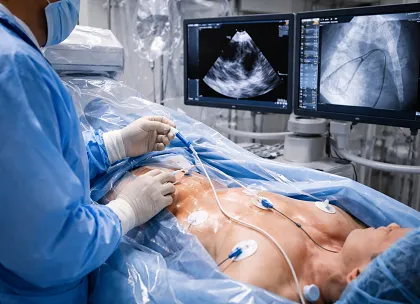
Cardiovascular procedural strategies in persistent atrial fibrillation (AF) continue to evolve, particularly for the adjunctive vein of Marshall (VOM) ethanol infusion. A retrospective matched cohort study published in the Cardiovascular Therapeutics evaluated the feasibility, efficacy, and safety of intracardiac echocardiography (ICE)-guided VOM ethanol infusion compared with conventional venography guidance in patients undergoing catheter ablation for persistent AF.
The analysis included 126 patients undergoing de novo radiofrequency (RF) catheter ablation, with 42 receiving ICE-guided and 84 receiving venography-guided VOM ethanol infusion. Propensity score matching (1:2) was used to balance baseline characteristics. Procedural endpoints included ethanol-induced low-voltage area (LVA), total procedure duration, fluoroscopy time, VOM ethanol infusion time, mitral isthmus (MI) ablation time, complications, and 12-month AF/atrial tachycardia (AT) recurrence. ICE enabled real-time visualization of ethanol-related tissue changes, whereas venography guidance relied on contrast extravasation.
ICE-guided procedures were associated with larger ethanol-induced LVAs and shorter total procedure duration, reduced fluoroscopy time, shorter VOM ethanol infusion time, and shorter MI ablation time (all p<0.05). Radiation exposure was also lower with ICE guidance. Major complications were rare and comparable between ICE- and venography-guided approaches (p=0.719). At 12 months, freedom from AF/AT recurrence did not differ between groups (log-rank p=0.66).
ICE-guided VOM ethanol infusion was associated with greater substrate modification and shorter procedure-related durations, along with lower radiation exposure compared with venography guidance.
Clinical recurrence outcomes were similar between groups. These findings should be interpreted in the context of the nonrandomized design and relatively small sample size. Further evaluation in randomized clinical trials is warranted to confirm these observations and define optimal procedural strategies.