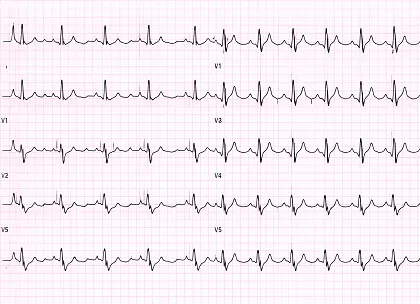
Early identification of individuals at risk for atrial fibrillation (AF) is essential to reduce adverse cardiovascular outcomes. Although AI-enhanced electrocardiogram (AI-ECG) tools have shown predictive potential, most require digital signal data, limiting use in image-based environments. This study published in the Heart Rhythm developed and validated an image-based AI-ECG model to predict incident AF.
The model was trained using 1,163,401 ECGs from 189,539 patients in the Beth Israel Deaconess Medical Center (BIDMC) dataset and externally validated using 70,655 ECGs from 65,610 participants in the UK Biobank. ECG images were standardized to 310×868 pixels before analysis.
The model achieved a C-statistic of 0.754 (95% confidence interval [CI] 0.747–0.761) in the BIDMC dataset and 0.723 (95% CI 0.704–0.741) in the UK Biobank. Performance was consistent across subgroups, including outpatients, women, and non-white individuals. Compared with the CHARGE-AF risk score (c-statistic 0.667), the AI-ECG model achieved higher discrimination (c-statistic 0.696; P < .05) and further improved performance when combined with CHARGE-AF (c-statistic 0.711; P < .0001). Performance remained robust using smartphone-photographed ECGs (C-statistic 0.736). Saliency mapping indicated emphasis on P-wave morphology and PR interval regions.
This image-based AI-ECG model demonstrated consistent predictive performance across diverse populations and imaging formats. This approach may facilitate AF risk assessment in settings without digital ECG infrastructure.