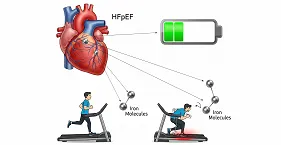
A new study published in JACC: Heart Failure has found that iron deficiency is highly prevalent and clinically relevant in patients with heart failure with preserved ejection fraction (HFpE). The study analyzes the effects of different iron markers on hemodynamic responses during exercise and predicts future heart failure outcomes.
The study included 372 patients with HFpEF who underwent invasive cardiopulmonary exercise testing. The researchers assessed various iron parameters, such as serum iron, transferrin saturation (Tsat), hepcidin, ferritin, and the Tsat/hepcidin ratio. 66% of participants were iron deficient according to the standard criteria.
Higher levels of Tsat, Tsat/hepcidin ratio, and serum iron were significantly associated with better peak oxygen consumption. These iron indicators were also associated with more favorable exercise-induced hemodynamic responses, such as lower pulmonary artery pressure and pulmonary capillary wedge pressure slopes relative to cardiac output. However, ferritin did not show any such associations.
Even after adjusting for other variables like age, hemoglobin levels, diuretic use, hypertension, and cardiac function, the associations between Tsat, Tsat/hepcidin ratio, and serum iron with exercise performance was consistent. Tsat levels were independently linked to improved heart failure-free survival; each higher tertile corresponding to a 40% lower risk of adverse outcomes.