A new large-scale longitudinal study published in the BMC Endocrine Disorders has found that the atherogenic index of plasma (AIP), a marker of atherosclerotic dyslipidemia, is significantly associated with an increased risk of developing type 2 diabetes (T2D) in Japanese adults.
The study tracked 15,453 Japanese adults over an average follow-up period of 6.05 years. During this time, 373 participants developed T2D. The researchers examined the association between AIP and the incidence of T2D while adjusting for a wide range of confounding factors, including age, sex, body mass index, and lifestyle variables.
Results demonstrated a statistically significant, independent association between elevated AIP and increased T2D risk. Individuals with higher AIP had more than two times the risk of developing T2D than those with lower levels (HR: 2.23, 95% CI: 1.55–3.20, P < 0.0001). While AIP levels below -0.45 showed no significant risk (HR: 0.35, P = 0.2298), AIP levels above this threshold were strongly associated with increased diabetes risk (HR: 2.61, P < 0.0001).
• Higher AIP is independently associated with increased risk of type 2 diabetes.
• A J-shaped relationship was observed between AIP and diabetes incidence
• No significant diabetes risk was found when AIP was below -0.45
• AIP above -0.45 significantly raised diabetes risk (HR: 2.61, P < 0.0001)
• AIP may serve as a valuable biomarker for early diabetes risk prediction
Liu D, Lou M, Tang Y, Li C, He H. A J-shaped association between the atherogenic index of plasma and diabetes risk in a Japanese population: a large-scale retrospective cohort study. BMC Endocr Disord. 2025;25(1):141. Published 2025 Jun 6. doi:10.1186/s12902-025-01951-y
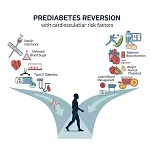
Atherogenic index of plasma (AIP), a marker of atherosclerotic dyslipidemia, is significantly associated with an increased risk of developing type 2 diabetes (T2D) in Japanese adults.