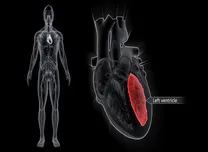
Left atrial reservoir strain obtained from cardiac magnetic resonance feature tracking emerged as a powerful prognostic marker in individuals with asymptomatic significant aortic regurgitation. Published in the International Journal of Cardiology, the study evaluated whether early atrial dysfunction can help identify higher-risk patients who have not yet met guideline-defined criteria for intervention.
The cohort included 111 adults with moderate to severe regurgitation and 40 age-matched controls. Left atrial reservoir strain was significantly reduced in affected individuals (15.6% vs 21%; p < 0.001). Over a median follow-up of 32 months, 27% experienced all-cause mortality or hospitalization for decompensated heart failure. After multivariable adjustment for left ventricular ejection fraction and regurgitant fraction, left atrial reservoir strain remained an independent predictor of adverse outcomes (p = 0.015).
Left atrial strain offers improved risk stratification in asymptomatic significant aortic regurgitation. Integrating this parameter with standard assessments may help identify patients who need closer surveillance or earlier treatment.