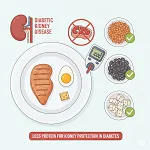
A recent study published in BMC Nutrition shed light on the benefits of long-term restriction of dietary protein intake (DPIsUCR ≤ 1.0 g/kg•d) in type 2 diabetes patients with chronic kidney disease (CKD)
The study aimed to understand how long-term dietary protein intake (DPI) restriction affects the clinical outcomes in patients with type 2 diabetes mellitus (T2DM0 and chronic kidney disease (CKD).
Researchers conducted a retrospective study, including 820 T2DM patients with CKD from 8 centers. A follow-up was done in cohorts from January 2014 to September 2023. Serum urea creatinine ratio (sUCR) was estimated to evaluate DPI. Renal transplant, cardiovascular diseases, progression to end-stage renal disease, initiation of dialysis, cerebrovascular diseases, and serum creatinine doubling were the primary outcomes.
Eight hundred fifty-six patients were divided into three equal groups based on their DPIsUCR levels using 1:1:1 propensity score matching with an average follow-up time of 32.94 months. Results showed that the primary endpoints were delayed along with an improved prognosis in patients on a restricted protein diet (DPIsUCR ≤ 1.0 g/kg•d). A significant improvement in prognosis was seen in stage 3-4 CKD patients with DPIsUCR < 0.8 g/kg•d. A similar result was seen in the NHANES cohort with 1723 patients with an average follow-up of 87.19 months. Reduced mortality and improved prognosis were observed with a restricted protein diet (DPIsUCR ≤ 1.0 g/kg•d)