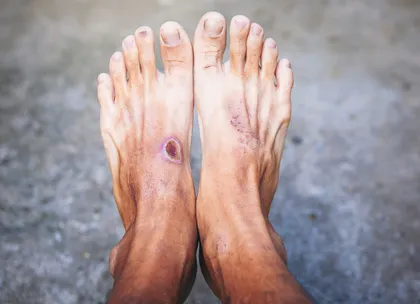
Loss of protective sensation (LOPS) was associated with substantially higher odds of multiple diabetic foot complications over long-term follow-up in a large longitudinal analysis published in Diabetes Research and Clinical Practice. The findings also showed distinct complication trajectories based on sensory status and sex, with toenail deformity emerging as the most prevalent abnormality and fat pad atrophy showing the steepest relative increase over time.
The analysis included 14,436 diabetic foot screenings from 3,049 patients with complete records selected from 51,001 routine examinations performed at a tertiary diabetes clinic between 1998 and 2024. Generalized estimating equations adjusted for age at diabetes diagnosis, sex, diabetes type, and disease duration were used to model temporal trends across six diabetes-related foot complications.
LOPS was associated with significantly higher odds of several complications, including callus formation (OR, 3.66), toe deformities (OR, 2.57), toenail deformity (OR, 2.44), xerosis (OR, 2.27), and fat pad atrophy (OR, 2.12). Toenail deformity was the most prevalent complication during follow-up, while fat pad atrophy demonstrated the largest relative increase over time.
Female sex was associated with higher odds of selected deformities and fat pad atrophy, while lower odds of xerosis were observed among women (OR, 0.76). The findings suggest that long-term diabetic foot complication patterns differ according to LOPS status and demographic characteristics and may help support targeted screening and monitoring strategies.