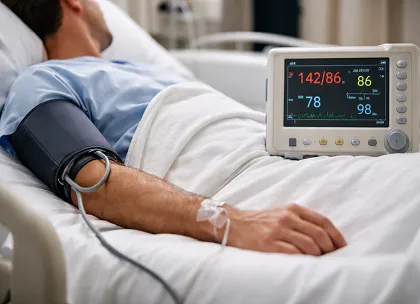
Hemodynamic response to vasoactive therapy after cardiac arrest (CA) may reflect underlying physiologic reserve, but its relationship with clinical outcomes remains unclear. A retrospective cohort study published in Medicine examined whether the blood pressure response index (BPRI), calculated as mean arterial pressure relative to vasoactive inotropic support, correlates with in-hospital outcomes.
The study included 109 adults admitted to an emergency intensive care unit between January 2019 and March 2024, of whom 41 survived to discharge and 68 died during hospitalization. Lower BPRI values were observed alongside more severe clinical profiles, including higher sequential organ failure assessment (SOFA) scores, acute physiology scores (APS), and elevated white blood cell and lactate levels.
After adjustment for confounders, lower BPRI remained independently associated with in-hospital mortality (odds ratio [OR], 5.35; 95% confidence interval [CI], 1.29-22.17) and acute kidney injury (OR, 4.98; 95% CI, 1.13-22.01). Discriminatory performance for these outcomes was higher for BPRI than for SOFA and APS based on receiver operating characteristic analysis.
These findings indicate that lower BPRI corresponds with adverse in-hospital outcomes following CA.