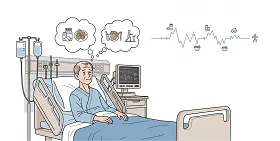
Do clinicians frequently measure the self-care confidence in heart failure patients before discharging them? A new study has found that heart failure (HF) patients who lack confidence in managing their own care during hospitalization are more likely to struggle with self-care after discharge. It can worsen outcomes in certain high-risk groups. The results were published in the Journal of Cardiac Care.
Researchers followed 100 HF patients who completed self-care questionnaires during their hospital stay and one year after discharge. Confidence levels were measured after a multidisciplinary pre-discharge education program, while self-care performance was assessed using the European Heart Failure Self-care Behavior Scale. The results revealed that the most commonly neglected post-discharge habits included seeking medical advice for fatigue (40%), responding to weight gain (52%), and maintaining regular exercise (57%).
Analysis showed that lower self-care confidence at discharge predicted poorer self-care performance a year later (OR: 1.11, CI: 1.00–1.21). While poor self-care overall did not significantly raise two-year mortality or readmission risk, the effect was pronounced in patients diagnosed with heart failure with reduced ejection fraction and those with prior HF hospitalizations, where the risk of poor outcomes was up to four times higher.
Increasing patient confidence before discharge could improve post-hospital self-care and enhance the quality of transitional HF care.
Key Takeaways
Low self-care confidence during hospitalization predicts poorer long-term self-care in HF patients, with high-risk patients facing greater risks from poor self-care. Exercise, fatigue management, and weight monitoring were the most neglected behaviors post-discharge.