A recent retrospective study has revealed that while luseogliflozin therapy effectively improves blood sugar control and body weight in patients with type 2 diabetes, its benefits on liver fibrosis may be compromised by alcohol consumption.
The study evaluated 192 patients who remained on luseogliflozin therapy for more than 12 months, assessing changes in the Fibrosis-4 (FIB-4) index—a marker of liver fibrosis risk—alongside secondary outcomes such as HbA1c, body weight, and serum albumin levels. Participants were divided into drinkers (consuming over 20 g of ethanol/day) and non-drinkers, and further stratified based on their FIB-4 index into low-risk (<1.3) and intermediate/high-risk (≥1.3) groups.
In the low-risk group, drinkers experienced a significant increase in FIB-4 over 12 months (from 0.91 to 1.14), while non-drinkers showed no meaningful change. Conversely, in the intermediate/high-risk group, non-drinkers demonstrated a significant decrease in FIB-4 (from 2.10 to 1.80), whereas drinkers exhibited no significant change.
Despite these divergent liver outcomes, both drinkers and non-drinkers in all risk categories experienced notable improvements in HbA1c and body weight. Serum albumin levels also rose significantly among non-drinkers in the intermediate/high-risk group, suggesting enhanced liver synthetic function, a benefit not observed in drinkers.
These findings suggest that although luseogliflozin is effective for glycemic and weight management in type 2 diabetes, alcohol intake may diminish its potential to improve liver fibrosis. Therefore, clinicians may need to counsel patients on the importance of moderating alcohol use to optimize liver health during treatment.
• Luseogliflozin improved HbA1c and body weight regardless of alcohol consumption.
• Liver fibrosis (FIB-4) improved only in non-drinkers in the intermediate/high-risk group.
• Drinkers in the low-risk group showed a significant increase in FIB-4.
• Serum albumin levels improved in non-drinkers, indicating better liver function.
• Alcohol may blunt liver benefits of luseogliflozin therapy in type 2 diabetes.
Ito H, Someya R, Koyanagi T, et al. Effect of luseogliflozin on liver fibrosis differs depending on alcohol consumption in patients with type 2 diabetes. J Diabetes Investig. 2025;16(6):1001-1009. doi:10.1111/jdi.70032
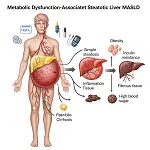
While luseogliflozin therapy effectively improves blood sugar control and body weight in patients with type 2 diabetes, its benefits on liver fibrosis may be compromised by alcohol consumption.