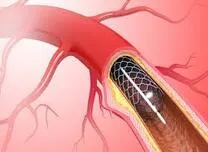
Patients with a history of ICH who undergo PCI face an elevated risk of mortality. A multicenter retrospective cohort analysis presented at the European Society of Cardiology Congress 2025 (ESC 2025) developed an interpretable machine-learning model to predict one-year ACM in this high-risk population.
The analysis included 1,379 patients treated at 82 hospitals in China between January 2010 and March 2024. The dataset was divided into a training cohort (70%) and an internal validation cohort (30%). Sixty-six clinical and laboratory variables were included, covering demographics, comorbidities, and initial laboratory findings. Eight ML algorithms were assessed, and the LightGBM algorithm demonstrated the highest predictive accuracy.
The LightGBM model achieved strong predictive performance, with an AUC exceeding 0.829 in the training cohort and 0.831 in the validation cohort, with 75.0% sensitivity, 72.3% specificity, and 72.4% accuracy. SHapley Additive exPlanations (SHAP) analysis identified D-dimer, hemoglobin, serum potassium, platelet count, Killip classification, and neutrophil count as the strongest predictors of ACM.
This explainable model can help clinicians identify high-risk patients early and guide personalized management after PCI. External validation is required to confirm its clinical applicability.