Is Banner Display?
Off
Page Content
#ffffff

The DanGer shock trial substudy compared microaxial flow pump (mAFP) and standard care in improving cardiac output and lowering pulmonary pressures in patients with STEMI-related cardiogenic shock. The results were reported in the Journal of the American College of Cardiology.

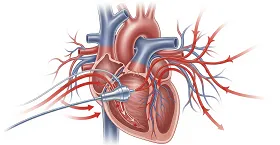
A substudy of the Danish-German (DanGer) shock trial investigated the effect of the microaxial flow pump (mAFP) on hemodynamic parameters, including cardiac output (CO), cardiac power output (CPO), and pulmonary artery pressure (PAP).

Of 324 patients admitted to the cardiac intensive care unit, 223 underwent pulmonary artery catheter monitoring. Of these, 125 received mAFP therapy while 98 received standard care. The study reported that patients treated with mAFP consistently have higher CO after 12 hours, lower mean PAP, and lower pulmonary capillary wedge pressure (PCWP) than patients on standard care. Median CPO values were also significantly higher in the mAFP group (0.68 W vs 0.56 W).
 

Anonymous user
On
Authenticated user
On
Premium
On
Paid / Sponsored
On
Key highlights
  • The mAFP group reported improved cardiac output compared to standard care after 12 hours, which was sustained through 48 hours.
  • Pulmonary artery pressures and left ventricular filling pressures were consistently lower with the use of mAFP.
  • Cardiac power output was significantly higher in patients receiving mAFP.
  • Overall, mAFP reduced the heart’s intrinsic workload and ensured efficient hydraulic power delivery to the body.
     
Source

Møller JE, Beske RP, Jensen LO, et al. Effect of Microaxial Flow Pump on Hemodynamics in STEMI-Related Cardiogenic Shock. J Am Coll Cardiol. 2025;85(25):2456-2468. Doi: http://doi.org/10.1016/j.jacc.2025.04.062 

Thumbnail
Flow Pump for STEMI
Speciality
Currency
Short Description

Microaxial flow pump improved cardiac output compared to standard care patients with STEMI-related cardiogenic shock. 

Release Date
Is Paid
0