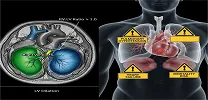
A simple MRI-derived measurement may offer a powerful new way to predict adverse outcomes in people with pulmonary hypertension (PH), according to a new prospective study in Progress in Cardiovascular Diseases. Researchers found that the right-to-left ventricular volume ratio (RV/LVvol ratio) was independently associated with enhanced risk of death or heart failure hospitalization in those with PH.
The study included 135 individuals diagnosed with PH. All patients underwent cardiac MRI, and the RV/LVvol ratio was assessed. A value of 1.27 or higher was considered abnormal.
Over a mean follow-up period of 1.9 ± 1.3 years, 75 patients (55.5%) experienced the composite primary outcome of all-cause mortality or heart failure hospitalization. Among the 56 patients (41.5%) with an abnormal RV/LVvol ratio, 64.3% experienced the primary outcome, compared to 50.0% in those with a normal ratio (p = 0.02).
The study showed that an abnormal RV/LVvol ratio was linked to a significantly higher risk of adverse outcomes (hazard ratio 1.81, 95% CI: 1.06–2.97; p = 0.003), even after adjusting for age and other cardiac MRI indices. The RV/LVvol ratio added significant prognostic value beyond traditional right ventricular measures, with the model’s global chi-square value improving from 6.7 to 17.4 (p = 0.006).