SEE Complicates AF Beyond Stroke
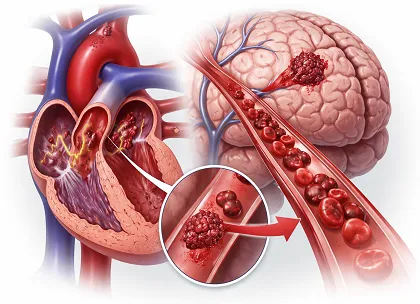
Systemic embolic events (SEEs) affect limbs and organs beyond brain strokes in atrial fibrillation. Many cardiologists focus on ischemic stroke prevention alone. SEEs carry similar death rates but get less attention. This meta-analysis reveals their true burden and treatment response. The results of the meta-analysis were published in the Circulation.
Massive Trial Dataset Reveals Patterns
Researchers pooled individual patient data from 4 pivotal randomized trials from 2005 to 2010. Total patients reached 71,683 with atrial fibrillation on anticoagulation. They identified 188 clinically overt SEEs versus 1,797 ischemic strokes. Annualized SEE rate measured 0.13% per patient-year. Ischemic stroke rate hit 1.25% per patient-year.
SEE Patients Carry Heavier Risk
Among 171 first-time SEE patients, median age equaled 75 years with 49.7% female. Mean CHA2DS2-VASc score reached 4.7 plus or minus 1.5. Compared to stroke patients, SEE cases showed higher peripheral arterial disease at 16.5% versus 5.4% with p less than 0.001. Prior myocardial infarction affected 24% versus 17% with p=0.02.
NOACs Show Clear SEE Benefit
Standard-dose non-vitamin K antagonist oral anticoagulants reduced SEE risk by 29% over median 25.2 months follow-up. Hazard ratio measured 0.71 with 95% CI 0.51-0.99 and p=0.04 versus warfarin. Interventions occurred in 31% of SEE cases.
Mortality Matches Stroke Risk
Thirty-day mortality after SEE reached 18% similar to ischemic stroke at 17%. Long-term mortality risk tripled nearly with hazard ratio 2.85 and 95% CI 2.11-3.85 versus event-free patients.
Screen PAD Heavily in AF
Peripheral artery disease, smoking, non-paroxysmal AF, female sex, prior MI, stroke history, warfarin experience, and renal dysfunction predict SEE independently. Check ABI routinely in high CHA2DS2-VASc patients.
NOACs Protect Full Circulation
SEE prevention justifies NOAC preference across AF spectrum. Full embolic protection beats stroke-only focus.
Featured
Off
Page Content
#ffffff
Anonymous user
On
Authenticated user
On
Premium
On
Paid / Sponsored
On
Key highlights
- Individual patient data meta-analysis from 4 trials identified 188 SEEs among 71,683 AF patients, yielding annualized rate of 0.13% versus 1.25% for ischemic stroke.
- SEE patients showed higher peripheral arterial disease (16.5% vs 5.4%, p<0.001), prior myocardial infarction (24% vs 17%, p=0.02), and nonparoxysmal AF (86% vs 80%, p=0.047) than ischemic stroke patients.
- Standard-dose NOACs reduced SEE risk by 29% compared to warfarin over median 25.2 months (HR 0.71, 95% CI 0.51-0.99, p=0.04).
- Thirty-day mortality after SEE reached 18% similar to ischemic stroke, with nearly 3-fold long-term mortality risk (HR 2.85, 95% CI 2.11-3.85) versus event-free patients.
- Independent SEE predictors included peripheral artery disease, smoking, nonparoxysmal AF, female sex, prior MI, stroke history, warfarin experience, and renal dysfunction.
Source
Al Said S, Braunwald E, Palazzolo MG, et al. Systemic Embolic Events in Atrial Fibrillation: An Individual Patient Data Meta-analysis of 71 683 Participants Randomized to NOAC Versus Warfarin. Circulation. Published online January 30, 2026. doi: https://doi.org/10.1161/circulationaha.125.075275
Thumbnail
Speciality
Currency
Sub Speciality
Sub Sub Speciality
Short Description
Meta-analysis of 71,683 AF patients shows NOACs reduce SEEs by 29% (HR 0.71) vs warfarin; SEEs occur at 0.13% rate with 18% 30-day mortality like ischemic stroke.
User Segments
Release Date
Featured Order
0
Is Paid
0
Send Notification
Off