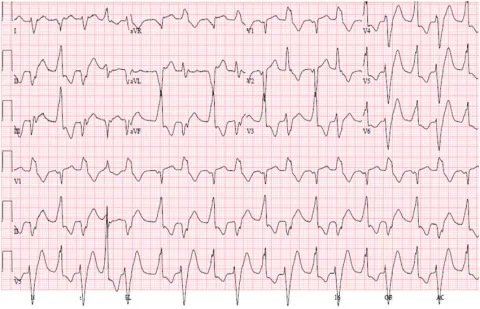
Noninvasive electrocardiographic imaging (ECGi) offers a potential approach for mapping arrhythmogenic substrates in scar-dependent ventricular tachycardia (VT), but accuracy data compared with established invasive methods remain limited. A mapping study published in Europace evaluated the accuracy of ECGi using the View into Ventricular Onset (VIVO) system against electro-anatomical mapping (EAM) and assessed its relationship with myocardial scar, isthmus regions, VT exit sites, and successful ablation targets.
The analysis included 48 VT episodes in 31 patients, with both ECGi and EAM used to define arrhythmogenic substrates. Myocardial segments were assigned using the American Heart Association (AHA) ventricular segment model, and all analyses were conducted in a blinded manner.
Exact concordance between ECGi and EAM for VT exit site region localization was observed in 67% of VTs, while partial concordance involving adjacent segments occurred in 21%. ECGi-defined VT exit site regions were located within or adjacent to imaging-defined myocardial scar in 85% of VTs.
The VT isthmus was located within or adjacent to ECGi-defined exit regions in 77% of VTs, and successful ablation sites were similarly aligned in 82%. For epicardial VT exit site identification, ECGi showed a sensitivity of 71.4% and specificity of 92.9% in ischemic cardiomyopathy, and 66.7% and 100% in nonischemic cardiomyopathy. Accuracy was not affected by cardiomyopathy type or VT cycle length.
These findings show that ECGi demonstrates substantial agreement with invasive mapping for identifying arrhythmogenic substrates in scar-dependent VT, supporting its potential role in guiding ablation strategies.