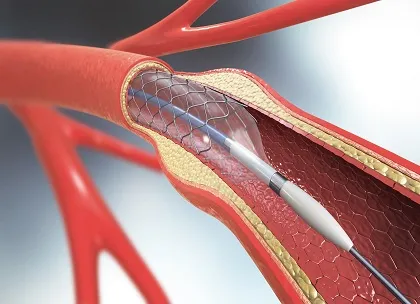
Paclitaxel-coated balloons were associated with lower repeat revascularization rates than limus-coated balloons in patients with in-stent restenosis (ISR). Drug-coated balloons (DCBs) are used for the management of ISR, avoiding placement of an additional metallic layer. Among available options, paclitaxel-coated balloons (PCBs) and limus-coated balloons (LCBs), including sirolimus- or biolimus-based platforms, are commonly used. This systematic review and meta-analysis, published in American Journal of Cardiology, evaluated clinical and angiographic outcomes associated with these approaches.
A systematic search of PubMed, Embase, Cochrane, Scopus, and Web of Science identified randomized controlled trials (RCTs) comparing LCB and PCB in coronary ISR. Outcomes were analyzed using risk ratios (RR) for categorical variables and mean differences (MD) for continuous variables in a random-effects model. Heterogeneity was assessed using the I² statistic.
Six RCTs including 1,038 patients (552 LCB, 481 PCB) were analyzed. LCB was associated with a higher risk of clinically driven target lesion revascularization (TLR) (RR 1.48; 95% CI 1.02-2.14; p=0.04; I²=0%) and target lesion failure (TLF) (RR 1.19; 95% CI 0.87-1.62; p=0.27; I²=0%). No differences were observed in all-cause mortality (RR 0.98; p=0.96), myocardial infarction (RR 0.73; p=0.46), stent thrombosis (RR 0.66; p=0.57), or major adverse cardiovascular events (MACE) (RR 1.09; p=0.58). Angiographic outcomes were comparable, including late lumen loss (MD −0.00 mm; p=0.65; I²=74.7%) and minimal lumen diameter (MD −0.12 mm; p=0.07).
These findings indicate that PCB was associated with lower repeat revascularization compared with LCB, while other clinical and angiographic outcomes remained similar.