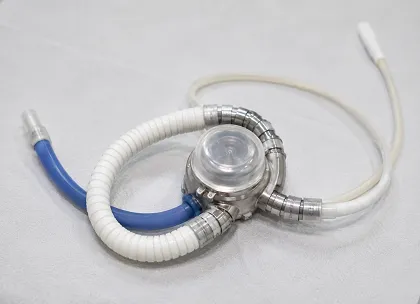
Pediatric patients with advanced heart failure increasingly depend on durable ventricular assist device (VAD) support as a bridge to transplantation. Currently available durable pediatric VAD systems for infants and small children have historically been limited by reduced mobility and quality-of-life challenges associated with conventional driving systems.
A prospective multicenter clinical trial published in the Journal of the American College of Cardiology evaluated a novel active driving system designed to improve mobility, battery life, and physiologic adaptability in pediatric patients requiring VAD support. The study enrolled 40 patients under a U.S. Food and Drug Administration investigational device exemption protocol, followed by 118 additional patients through a continued access program.
Among the 40 investigational patients, the mean age was 38.2 months, and 55% had congenital heart disease. No major device malfunctions occurred during follow-up. At 90 days, 65% remained on support, 17.5% underwent transplantation, 15.0% transitioned to another support modality, and 1 patient underwent device explantation after recovery. Stroke occurred in 12.5% of patients, while 90-day mortality was 0%.
In the continued access cohort, no major device malfunctions were reported. At data abstraction, 37% had undergone transplantation, 31% remained alive on device support, 6% underwent device explantation for recovery, and 23% transitioned to another support modality. Overall, 90-day survival was 98.1%.
These findings suggest that the novel active driving system demonstrated good safety and reliability in pediatric patients requiring durable VAD support.