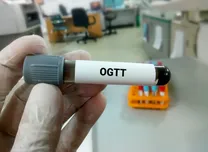
Early glucose abnormalities often remain undetected using routine measures, and 1-h PG has gained attention as a sensitive indicator of early dysglycemia. A study published in Diabetes Research and Clinical Practice evaluated optimal 1-h PG cutoffs for IH and T2DM in a Chinese population.
The analysis included 927 adults across the spectrum of glucose tolerance. The maximum Youden index identified optimal 1-h PG thresholds, and all individuals were reclassified using these values. Agreement between the 1-h PG–based classification and standard OGTT categories was assessed using the weighted Cohen’s kappa coefficient.
The optimal thresholds were 9.63 mmol/L for IH and 13.04 mmol/L for T2DM. These values produced higher specificity and a higher Youden index than recommended cutoffs, although sensitivity was lower. Among individuals with normal glucose tolerance, elevated 1-h PG corresponded with higher insulin secretion under glucose stimulation. Agreement between 1-h PG thresholds and OGTT categories was strong with a weighted Cohen’s kappa of 0.600 (95 percent confidence interval 0.553 to 0.646).
These findings indicate that 1-h PG may provide an effective and practical approach for early identification of glucose dysregulation in clinical settings.