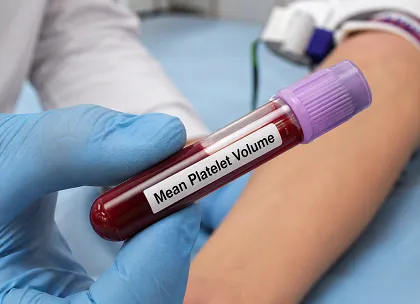
Long-term warfarin therapy after mechanical heart valve replacement requires consistent anticoagulation control, yet many patients remain outside the target range. A retrospective longitudinal cohort study in the Journal of Cardiovascular Pharmacology evaluated whether mean platelet volume (MPV) could help identify anticoagulation quality in 370 patients receiving warfarin.
Serial measurements of MPV and international normalized ratio (INR) were obtained at five predefined time points. Anticoagulation control was quantified using time in therapeutic range (TTR), calculated via the Rosendaal method, with effective control defined as TTR ≥60%.
Overall, only 34.1% of patients achieved effective TTR, indicating that most patients did not reach target anticoagulation control. Mean MPV was 10.31 ± 1.04 fL, while mean INR was 2.79 ± 0.54. No statistically significant correlation was observed between MPV and TTR in the overall cohort.
However, patients with a mean INR ≤3.0 demonstrated higher MPV values compared with those with an INR >3.0 (10.40 vs 10.13 fL). Subgroup analyses showed an inverse association between MPV and INR among patients with mitral valve replacement, whereas no such relationship was evident in patients with aortic valve replacement. Temporal variability in these associations was noted across measurement intervals.
MPV showed poor discriminatory ability for identifying patients with effective TTR. Multivariable regression analysis identified atrial fibrillation, older age, higher platelet count, and higher hemoglobin levels as independent predictors of achieving TTR ≥60%, whereas MPV was not independently associated.
MPV was not a reliable indicator of anticoagulation quality in this cohort. Strategies to improve TTR remain necessary in patients with MHV receiving warfarin.