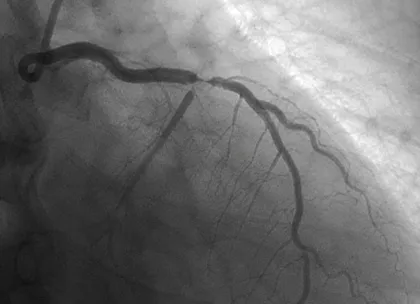
Proximal left anterior descending (LAD) artery disease carries substantial prognostic importance, particularly when lesions involve the LAD ostium. Comparative outcome data between ostial and non-ostial proximal LAD lesions remain limited. A retrospective cohort study published in the International Journal of Cardiology evaluated 2-year clinical outcomes after percutaneous coronary intervention (PCI) for ostial proximal LAD (O-pLAD) versus non-ostial proximal LAD (NO-pLAD) lesions.
The analysis included patients who underwent PCI for significant proximal LAD disease between June 2017 and September 2023. O-pLAD lesions were defined as ≥70% stenosis within 5 mm of the LAD ostium, whereas NO-pLAD lesions were located distal to this segment and proximal to the first major septal or diagonal branch. Multivariable Cox regression and inverse probability of treatment weighting analyses were performed to adjust for baseline clinical and procedural differences.
Findings
- The study included 1,229 patients, including 522 with O-pLAD lesions and 707 with NO-pLAD lesions.
- Patients with O-pLAD lesions were older and more frequently had multivessel disease and lesion calcification.
- At a median follow-up of 730 days, target lesion failure occurred more frequently in the O-pLAD group than in the NO-pLAD group (14.6% vs 7.9%).
- NO-pLAD lesions remained associated with significantly lower target lesion failure after inverse probability weighting adjustment.
- Target lesion revascularization rates were significantly lower in the NO-pLAD group and remained lower after multivariable adjustment.
- Cardiac death, target-vessel myocardial infarction, and major adverse cardiovascular event rates were similar between groups.
The findings suggested that ostial involvement of proximal LAD lesions was associated with higher rates of target lesion failure and repeat revascularization after PCI compared with non-ostial proximal LAD lesions over 2 years of follow-up.