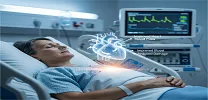
A new study in EuroIntervention has shown that delivering oxygen-rich blood directly to the heart after a major heart attack can significantly limit heart muscle damage and improve recovery. Supersaturated oxygen (SSO₂) therapy, when used in addition to the standard procedure of opening blocked arteries, offers a reduction in heart injury and improved blood flow in patients with anterior acute myocardial infarction (AMI).
The study focused on whether SSO₂ could reduce the final infarct size (FIS) and microvascular obstruction (MVO).
Researchers followed 40 patients who had experienced anterior AMI. Twenty patients received intracoronary SSO₂ therapy for 60 minutes after successful primary percutaneous coronary intervention (PCI), while 20 comparable patients did not. All participants were similar in age, risk factors, and heart attack severity.
Advanced imaging techniques, such as cardiac MRI, SPECT, and FAPI-PET, found that SSO₂ therapy significantly reduced heart damage. Patients in the SSO₂ group had a 20% infarct size on cardiac magnetic resonance imaging compared to 32% in the non-SSO₂ group. Similar reductions were noted on SPECT scans (16% versus 29%). Those treated with SSO₂ also had significantly greater myocardial salvage (50% versus 28%) and experienced less frequent and less severe microvascular obstruction.