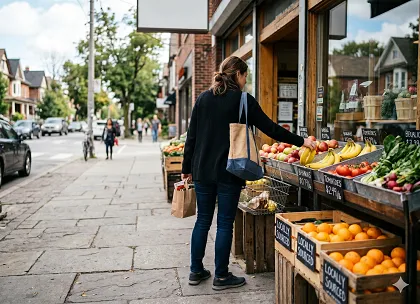
Adults who perceived neighborhood food shopping as inadequate had a higher incident cardiovascular disease (CVD) risk in a large community cohort. Findings from the Multi-Ethnic Study of Atherosclerosis (MESA), published in the Journal of the American Heart Association, evaluated whether perceived neighborhood food shopping adequacy was associated with future CVD events.
The prospective cohort included 6,814 adults aged 45 to 84 years enrolled between 2000 and 2002 and followed longitudinally. Cox proportional hazards models adjusted for sociodemographic, behavioral, and cardiovascular risk factors.
Approximately 20% of participants reported inadequate neighborhood food shopping. This was more common among Black and Hispanic participants and among those with lower income or a high school education or less.
During follow-up, incident CVD rates were higher among those reporting inadequate neighborhood food shopping than among those reporting adequate access (1.39 vs 1.19 per 100 person-years). In fully adjusted analyses, perceived inadequacy was associated with a 21% higher risk of incident CVD (hazard ratio [HR] 1.21; 95% confidence interval [CI] 1.04-1.41; P=0.013).
Perceived neighborhood food shopping adequacy may represent an important social determinant associated with cardiovascular risk.