Cardiovascular disease and cancer share overlapping risk factors, yet the influence of prior malignancy on coronary plaque characteristics during acute coronary syndrome (ACS) remains incompletely defined. This multicenter, ambispective observational study published in Atherosclerosis assessed coronary atherosclerotic burden and lesion complexity in ACS patients with and without a history of cancer.
Between September 2016 and December 2022, 618 patients were included across three cohorts: ACS with prior cancer (ACSC), ACS without cancer (ACSNC), and stable chronic coronary artery disease (CCAD), with 206 patients in each group. A total of 3,752 coronary lesions were analyzed. The most common malignancies were prostate, hematological, and colorectal cancers. Propensity score matching balanced baseline characteristics between ACSC and ACSNC groups.
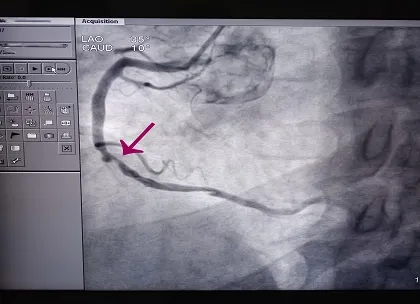
Compared with CCAD, ACS presentations showed more eccentric and ulcerated lesions, greater bifurcation involvement, and higher SYNTAX and Leaman scores (all p < 0.01). After matching (234 ACSC vs ACSNC), ACSC patients had higher anatomical complexity, including elevated SYNTAX scores (p = 0.02), more B2/C lesions (p < 0.01), and increased plaque rupture (p=0.03). Plaque rupture was more frequent in proximal vessel segments in ACSC (p < 0.01).
Among patients with ACS undergoing invasive coronary angiography, those with prior cancer more frequently exhibited plaque rupture and greater anatomical complexity compared with those without cancer.