A new study examining over 1,000 recreational endurance athletes found no significant association between elevated cardiac troponin (cTn) levels after exercise and underlying coronary atherosclerosis. The results were published in Journal of the American College of Cardiology.
Researchers assessed pre- and post-exercise levels of high-sensitivity cardiac troponin T (hs-cTnT) and I (hs-cTnI) in 1,011 middle-aged recreational walkers, runners, and cyclists (median age 56 years; 63% male). From this group, 68 athletes with high post-exercise cTn levels and 34 with low levels—matched by age, sex, and type of sport—underwent coronary CT scans to evaluate plaque burden and stenosis severity using CAD-RADS scores and coronary artery calcium (CAC) scoring. CT-derived fractional flow reserve (CT-FFR) was used to assess the hemodynamic significance of coronary narrowing.
Coronary atherosclerosis, defined as a CAD-RADS score above 0, was detected in 67.6% of high cTn responders and 50.0% of low responders, a difference that was not statistically significant (adjusted odds ratio 1.55; 95% CI: 0.81–2.93). Similarly, coronary calcium scores showed no meaningful difference between the two groups (median 9 AU vs 2 AU; P = 0.58). CT-FFR analysis also showed no difference in the rate of functionally significant lesions (FFR ≤ 0.75: 11.8% in high responders vs 5.9% in low responders; adjusted OR 1.03).
Weak associations were noted between troponin concentrations and CAD-RADS scores.
• Post-exercise elevations in hs-cTnT and hs-cTnI are not significantly associated with coronary artery disease in recreational athletes.
• The prevalence of coronary plaque and calcium scores was similar between athletes with high and low troponin responses.
• Functional coronary stenoses, as assessed by CT-FFR, did not differ between the two groups.
• Minor associations were found between troponin levels and CAD-RADS scores, but these explained only a small portion of the overall variability.
• Most interindividual variability in post-exercise troponin rise appears unrelated to underlying coronary atherosclerosis.
Janssen SLJE, van Everdingen WM, Saalmink WBJ, et al. Relationship Between Exercise-Induced Cardiac Troponin Elevations and Occult Coronary Atherosclerosis in Middle-Aged Athletes. J Am Coll Cardiol. 2025;85(24):2370-2382. doi:10.1016/j.jacc.2025.04.047
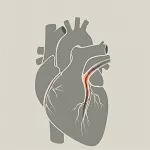
A study reported no significant association between elevated cardiac troponin (cTn) levels after exercise and underlying coronary atherosclerosis.