Newborns with d-transposition of the great arteries may develop severe hypoxia at birth if intracardiac mixing of oxygenated and deoxygenated blood is inadequate. Identifying fetuses at risk for postnatal hypoxemia may help anticipate the need for urgent balloon atrial septostomy (BAS) shortly after delivery. The study was published in Ultrasound in Obstetrics & Gynecology.
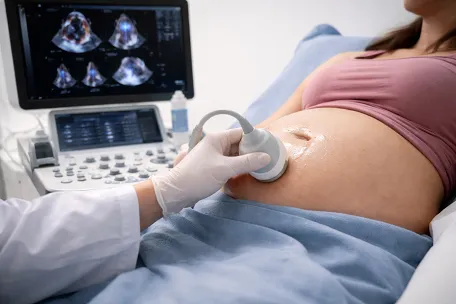
A prospective single-center cohort study evaluated prenatal imaging features associated with neonatal hypoxia and early BAS. Pregnancies with TGA and either an intact ventricular septum or a single ventricular septal defect ≤4 mm were included. Between 34 and 38 weeks’ gestation, participants underwent fetal echocardiography and, when feasible, cardiac magnetic resonance imaging (CMR). Echocardiography assessed cardiac anatomy, including the foramen ovale (FO) and atrial septal morphology using two-dimensional and Doppler imaging. CMR quantified fetal weight, brain volume, and vascular oxygen saturation. Blood flow measurements were evaluated under room air conditions and during acute maternal hyperoxygenation (AMH). Postnatal outcomes included preductal SpO₂ and the need and timing of BAS.
Among 34 newborns with TGA, 23 (68%) required neonatal BAS, including 12 (35%) who required urgent BAS within 3 hours after birth for persistent preductal SpO₂ <70%. Fetal echocardiography was performed in all cases, while 26 (76%) underwent CMR. Significant predictors of urgent BAS included abnormal atrial septal flap morphology during room air evaluation (P = 0.004), effective FO size ≤3.4 mm during AMH (P = 0.0024), and constricted or continuously reversed diastolic flow across the ductus arteriosus during AMH (P = 0.0006). On CMR, an ascending aorta–to–main pulmonary artery SaO₂ ratio >1 during AMH was associated with urgent BAS (odds ratio 28.6; 95% CI 1.1–620.3).
Prenatal imaging parameters were associated with neonatal hypoxia risk in fetuses with TGA. These findings were associated with the need for urgent BAS after birth.