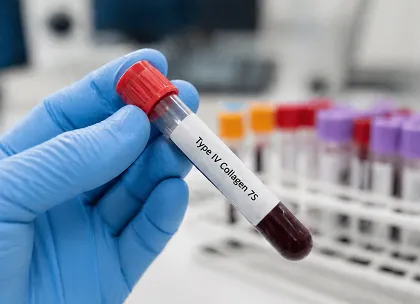
Outcomes after transcatheter aortic valve implantation (TAVI) remain variable, and improved preprocedural risk markers may help identify patients at higher risk. A prospective single-center cohort study published in Heart and Vessels evaluated whether preprocedural type IV collagen 7S (P4NP 7S), a biomarker associated with hepatic fibrosis and venous congestion, was linked to outcomes after TAVI.
A total of 398 consecutive patients with severe aortic stenosis who underwent TAVI between June 2019 and December 2024 were included. Serum P4NP 7S levels were measured before the procedure, and participants were categorized into tertiles.
The primary endpoint was a composite of all-cause death or heart failure (HF) hospitalization.
During a median follow-up of 773 days, 82 primary events occurred. Higher P4NP 7S tertiles were associated with congestion-related clinical profiles, and event rates increased progressively across tertiles (log-rank P<0.001).
In adjusted analyses, compared with the lowest tertile, the middle tertile was associated with a higher risk of the composite outcome (HR 2.30; 95% CI 1.15-4.61), and the highest tertile had further increased risk (HR 2.90; 95% CI 1.48-5.65). Each 1 ng/mL increase in P4NP 7S was associated with a higher risk (HR 1.15; 95% CI 1.06-1.26).
Higher preprocedural P4NP 7S levels were independently associated with adverse outcomes after TAVI and may help support risk stratification and closer follow-up.