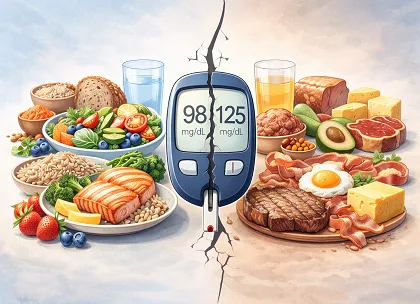
Prediabetes affects millions, and doctors push weight loss to reverse it. But which diet works best long-term?
The PREVIEW trial, a 3-year study across centers, tested two after an 8-week low-calorie kickstart. Overweight adults with prediabetes (fasting glucose 5.6-6.9 mmol/L or 2-hour OGTT 7.8-11.0 mmol/L) split into groups. The results were published in the Diabetologia.
One got high-protein (25% energy), low-GI (<50) diet. The other followed a prudent diet: moderate protein (15%), moderate GI (>56)—like standard healthy eating guidelines. Researchers tracked remission (normal fasting glucose and OGTT) at 1 and 3 years, plus weight and body changes. Over 1,856 patients stayed in analysis.
Higher Remission with Everyday Healthy Eating
The moderate-protein, moderate-GI group won big. At 1 year, 26.3% hit remission versus 20.7% on high-protein, low-GI (RR 1.26, 95% CI 1.04-1.53, p=0.025). At 3 years, 20.6% versus 15.5% (RR 1.26, 95% CI 1.06-1.50, p=0.015). Weight results tied: 54% versus 57% kept 8% loss at 1 year, 31% versus 30% at 3 years. Body fat and muscle shifts matched too. Remission edge held independent of weight—key for clinics.
Why Simple Diet Outperforms Strict Plans
High-protein, low-GI diets promise quick wins but fade over time. Prudent eating—veggies, fruits, whole grains, balanced protein—fits life better. Easier to stick with, sustains glucose control. Patients drop low-GI fads; moderate plans last. BMI 25-30 starters saw real reversal without extremes. Adjusted for age and sex, results stuck.
Practical Changes for Prediabetes Patients
Doctors may avoid pushing low-carb trends. Advise a balanced plate that includes half vegetables, one-quarter protein like chicken, fish, or beans, and one-quarter carbohydrates such as brown rice or potatoes. Monitor fasting glucose and OGTT every year. Maintaining normal blood glucose reduces diabetes risk.
Guideposts for Diabetes Prevention
Diet guidelines may soon favor balanced eating over strict plans. The PREVIEW study's 3-year results beat short-term trials. For obese prediabetic patient, "Balanced food fixes blood sugar better than too much protein." Check progress at 1 year. 26% remission motivates well.
Featured
Off
Page Content
#ffffff
Anonymous user
On
Authenticated user
On
Premium
On
Paid / Sponsored
On
Key highlights
- Prudent diet with moderate protein and moderate GI achieves higher prediabetes remission than high-protein, low-GI diet at 1 year (26.3% vs 20.7%) and 3 years (20.6% vs 15.5%).
- Both diets show similar weight loss maintenance (around 30-57% keeping ≥8% loss) and body composition changes over 3 years.
- Prediabetes remission benefits of the prudent diet occur independent of weight or body composition improvements.
- The moderate-protein, moderate-GI diet matches general healthy eating guidelines and proves more effective long-term after initial weight loss.
- Physicians should recommend balanced prudent diets over restrictive high-protein, low-GI patterns for sustained prediabetes reversal.
Source
Zhu R, Guo J, Huttunen-Lenz M, et al. Long-term effects of dietary protein and carbohydrate quality on prediabetes remission: results from the PREVIEW randomised multinational diabetes prevention trial. Diabetologia. 2026 Jan;69(1):81-92. Doi: https://doi.org/10.1007/s00125-025-06560-x
Thumbnail
Speciality
Currency
Sub Speciality
Short Description
PREVIEW trial shows moderate-protein, moderate-GI prudent diet reverses prediabetes in 26% at 1 year vs 21% on high-protein low-GI.
User Segments
Release Date
Featured Order
0
Is Paid
0
Send Notification
Off