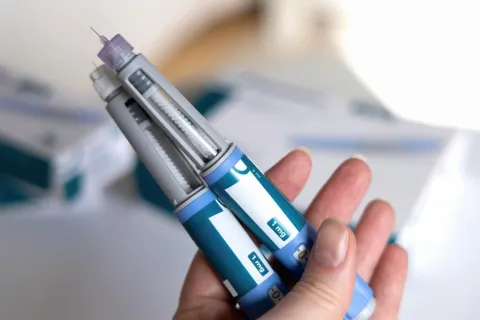
Real-world data on tirzepatide use in Japanese patients with type 2 diabetes (T2DM) remain limited despite established efficacy in randomized trials. This multi-site retrospective cohort study, published in Diabetes, Obesity, and Metabolism, evaluated 203 Japanese adults who initiated tirzepatide at three outpatient clinics between July 2023 and August 2024, with a 52-week follow-up. The primary endpoint was the change in HbA1c at 52 weeks. Subgroup analyses across 22 predefined patient characteristics showed generally consistent glycemic effects.
Baseline mean HbA1c was 7.7%, and mean body mass index was 29.1 kg/m². Most participants (82.3%) were receiving prior antidiabetic therapy, including insulin in 30.0%. The overall mean HbA1c reduction was −0.91% (95% CI −1.08 to −0.74; p<0.001), and 61.2% achieved HbA1c <7.0%. Incretin-naïve patients experienced greater reductions in HbA1c than those switching from GLP-1 receptor agonists (−1.19% vs −0.65%; p=0.005). Mean weight reduction was −3.4 kg. Treatment persistence at 52 weeks was 92.6%. Gastrointestinal adverse events occurred in 6.4% of participants, and no hypoglycemia was documented.
The retrospective design, lack of prospective registration, and absence of a control group limit causal inference. Potential confounding by indication and residual confounding from unmeasured variables cannot be excluded.
These findings indicate clinically significant reductions in glycemia and weight, with favorable safety over 52 weeks. Interpretation should consider the inherent limitations of observational study design.