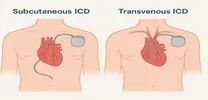
The PRAETORIAN-XL trial, an extended follow-up of the landmark PRAETORIAN study, has reaffirmed the long-term safety of the subcutaneous implantable cardioverter defibrillator (S-ICD) in patients requiring defibrillator therapy but without a pacing indication. The results were published in the Circulation.
The median follow-up of the study was more than seven years. The study found an association of the S-ICDs with fewer major and lead-related complications compared to traditional transvenous ICDs (TV-ICDs).
Launched between 2011 and 2017 across 39 centers in Europe and the U.S., the PRAETORIAN trial randomized 849 patients (426 to S-ICD, 423 to TV-ICD) with Class I or IIa indications for ICD therapy. While the initial 49.1-month results showed non-inferiority of the S-ICD regarding device-related complications and inappropriate shocks, the PRAETORIAN-XL extension added four more years of follow-up to explore longer-term safety outcomes.
Overall device-related complications (including both major and minor events) were not significantly different between the two groups (sub-distribution HR: 0.73; 95% CI: 0.48–1.12; P = 0.15). However, TV-ICD recipients experienced a significantly higher rate of major complications (P = 0.03) and lead-related complications (P < 0.001).
The study reported a 36% lower hazard of complications in patients treated with S-ICDs (HR: 0.64; 95% CI: 0.41–0.99; P = 0.047).