Atrial functional mitral regurgitation (AFMR) is increasingly recognized as a clinically important phenotype in heart failure with preserved ejection fraction (HFpEF), particularly because of its association with adverse hemodynamics and exercise intolerance.
In a multicenter, randomized, open-label trial with blinded endpoint assessment published in the Circulation, investigators evaluated the impact of sacubitril/valsartan on exercise hemodynamics and AFMR severity in symptomatic HFpEF. A total of 84 patients with HFpEF and at least moderate AFMR within the prior year were randomized to sacubitril/valsartan (n=41) or standard-of-care therapy (n=43).
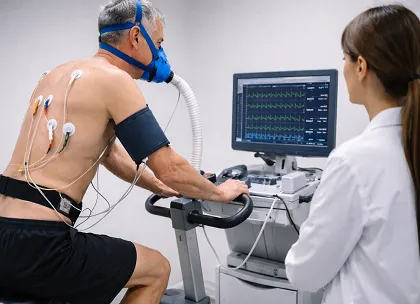
The primary endpoint was the 6-month change in exercise mean pulmonary arterial pressure to cardiac output (mPAP/CO) slope, assessed using cardiopulmonary exercise testing with simultaneous echocardiography (CPETecho). Secondary endpoints included peak oxygen consumption (peak VO₂), Kansas City Cardiomyopathy Questionnaire (KCCQ) scores, NT-proBNP levels, left atrial (LA) structure and function, and AFMR severity at rest and during exercise.
Findings
- Sacubitril/valsartan significantly improved the exercise mPAP/CO slope compared with standard care (difference −0.93 mmHg/L/min; 95% CI −1.80 to −0.07; p=0.035).
- Peak VO₂ improved in the sacubitril/valsartan group (+0.9 vs. −0.6 mL/kg/min; p=0.002).
- Significant reductions in NT-proBNP levels and LA volume were observed with sacubitril/valsartan treatment (p<0.001 for both).
- Sacubitril/valsartan was associated with attenuation of exercise-induced increases in AFMR severity (p=0.020).
The findings suggest that sacubitril/valsartan may improve exercise hemodynamics, functional capacity, and dynamic AFMR burden in patients with HFpEF and AFMR.