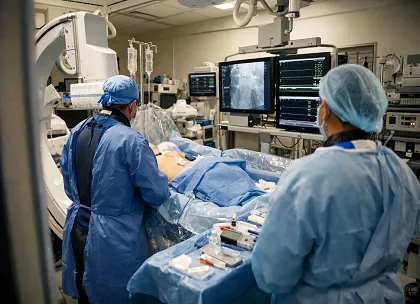
A prospective cohort study (SAVER) published in the European Journal of Preventive Cardiology assessed a structured screening strategy for detecting cardiac amyloidosis (CA) in patients with aortic stenosis (AS) undergoing transcatheter aortic valve implantation (TAVI) or surgical aortic valve replacement (SAVR). Between 2021 and 2023, 1001 patients with AS were enrolled. Initial screening incorporated CA-related symptoms and clinical history alongside standard AS evaluation.
Patients with suspected CA underwent confirmatory testing using technetium-labeled DPD scintigraphy or cardiac magnetic resonance imaging. Inclusion criteria comprised patients with AS planned for valve intervention, while specific exclusion criteria were not detailed in the abstract. Multivariable regression analysis was performed to identify predictors of CA and refine patient selection.
Among the cohort, 405 patients (40%) were flagged as potentially having CA based on initial screening. Of these, 206 patients (21%) underwent further diagnostic testing, along with an additional five patients evaluated based on clinical discretion. A total of 17 cases (2%) of CA were confirmed.
Key predictors associated with CA included male sex (odds ratio [OR] 23.8; 95% confidence interval [CI] 2.6–216.9), carpal tunnel syndrome (OR 5.5; 95% CI 1.4–22.0), spinal stenosis (OR 4.1; 95% CI 1.1–14.7), limb heaviness or numbness (OR 3.8; 95% CI 1.1–13.3), elevated N-terminal pro–B-type natriuretic peptide (NT-proBNP) (OR 6.7; 95% CI 1.8–25.3), and sparkling myocardium (OR 4.8; 95% CI 1.3–17.3). The optimized screening model demonstrated strong discrimination (area under the curve [AUC] 0.88; 95% CI 0.81–0.96).
This approach identified CA using a combination of clinical and imaging parameters. It demonstrated high discriminatory performance for detecting CA in AS populations.