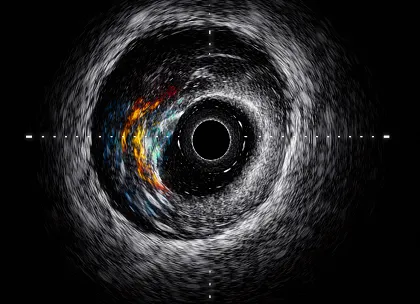
Coronary artery calcium (CAC) scores above 300 on dedicated CAC computed tomography (CT) have been associated with major adverse cardiac event (MACE) risk comparable to established atherosclerotic cardiovascular disease (ASCVD). A retrospective single-center analysis published in JACC: Advances evaluated whether CAC detected on attenuation-correction computed tomography (CTAC), routinely performed during nuclear myocardial perfusion imaging, could similarly identify patients whose risk approaches that of secondary prevention populations.
The study included 17,901 patients (48% female; mean age 64 ± 12 years) who underwent single-photon emission computed tomography/computed tomography or positron emission tomography/computed tomography imaging with CTAC. Prior ASCVD was defined as myocardial infarction (MI), cerebrovascular accident, peripheral artery disease, or prior revascularization. CAC was visually graded in each coronary artery from 0 to 3, generating a total score of 0 to 12 categorized as zero, mild (1–2), moderate (3–6), or severe (≥7). The primary outcome was a composite of death, MI, or late revascularization.
Among 13,852 patients without prior ASCVD, CAC burden was zero in 45%, mild in 23%, moderate in 21%, and severe in 11%. Another 4,049 patients had established ASCVD. During a median follow-up of 25 months (Q1–Q3: 10–43), 2,006 patients (11%) experienced MACE.
Multivariable Cox regression showed no significant difference in risk for MACE, MI, or all-cause mortality between patients with severe CAC and those with established ASCVD (P > 0.05). These findings suggest that severe CAC identified on CTAC may help define a high-risk primary prevention subgroup that could warrant more intensive preventive management.