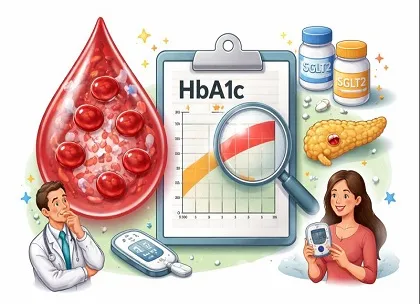
A multicenter retrospective study from two Japanese institutions uncovers a key quirk in diabetes management: patients on SGLT2 inhibitors show higher HbA1c levels than their actual glucose control suggests.
In a study published in the Journal of Diabetes Investigation, researchers examined 136 stable patients whose HbA1c had settled for at least six months on oral meds, comparing HbA1c directly to glucose management indicator (GMI), a continuous glucose monitoring (CGM) estimate of average glucose. Of these, 109 took SGLT2 inhibitors while 27 used other agents. Inverse probability of treatment weighting (IPTW) balanced the groups, revealing why this drug class trips up traditional metrics.
HbA1c Overstates Risk on SGLT2 Therapy
The core finding showed a clear discrepancy: HbA1c minus GMI (HbA1c–GMI) averaged 0.42% higher in the SGLT2 group after adjustment (95% CI: 0.14–0.70, P=0.003). This means HbA1c paints a gloomier picture than CGM data, potentially leading doctors to overtighten insulin or switch drugs unnecessarily. SGLT2 effects like increased red blood cell turnover or hemoglobin glycation changes likely explain the mismatch, a pattern clinicians see less with other orals.
Why This Matters for Daily Practice
In real-world care, this gap can confuse adjustments, especially since SGLT2 inhibitors shine for heart and kidney protection beyond glucose. Physicians relying on HbA1c alone might miss that patients enjoy tighter control than lab sheets imply, risking hypoglycemia from overcorrections. The study stresses CGM or GMI as better guides for these patients, aligning treatment with true excursions rather than a skewed long-term marker.
Stable Conditions Highlight True Effect
Data collection focused on stabilized HbA1c after six months, minimizing early fluctuations and isolating SGLT2's unique impact. IPTW adjustment tackled confounders like age, duration, and baseline control, strengthening trust in the 0.42% difference. No major safety issues arose, but the results prompt wider CGM use to validate SGLT2 benefits without metric misreads.
Shift Toward Smarter Monitoring Ahead
These insights push endocrinologists to pair HbA1c with CGM-derived GMI for SGLT2 users, avoiding overtreatment pitfalls. Trials could explore if this discrepancy predicts outcomes or varies by SGLT2 type. For now, it equips doctors to counsel patients confidently, framing higher HbA1c as a benign artifact rather than failure.
Featured
Off
Page Content
#ffffff
Anonymous user
On
Authenticated user
On
Premium
On
Paid / Sponsored
On
Key highlights
- SGLT2 inhibitor patients show a 0.42% higher HbA1c-GMI discrepancy than those on other oral agents after adjustment.
- HbA1c overestimates poor control in SGLT2 users, potentially leading to unnecessary therapy intensification.
- CGM-derived GMI provides a more accurate glycemic picture for patients stabilized on SGLT2 therapy.
- The study included 136 patients with six months of stable HbA1c, using IPTW to balance groups effectively.
- Clinicians should combine HbA1c with CGM data when managing SGLT2-treated diabetes patients.
Source
Mizutani K, Uenishi E, Onoue T, et al. Increased HbA1c relative to actual glycemic control in patients treated with sodium-glucose cotransporter 2 inhibitors. J Diabetes Investig. 2026 Jan;17(1):34-41. doi: https://doi.org/10.1111/jdi.70191.
Thumbnail
Speciality
Currency
Sub Speciality
Sub Sub Speciality
Short Description
SGLT2 inhibitors create a notable gap where HbA1c overestimates true glycemic control compared to CGM-derived GMI, urging doctors to rethink monitoring in diabetes patients.
User Segments
Release Date
Featured Order
0
Is Paid
0
Send Notification
Off