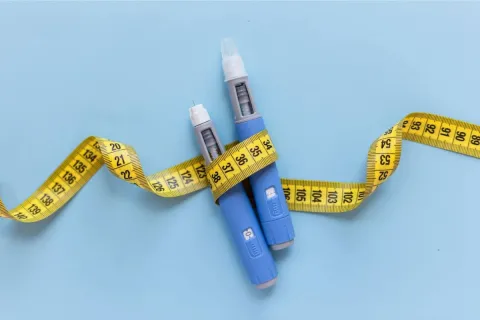
Overweight and obesity are prevalent among adults with type 1 diabetes mellitus (T1DM) and contribute to cardiovascular risk. In Diabetes Care, a phase 2, double-blind, placebo-controlled randomized trial evaluated tirzepatide, a gastric inhibitory polypeptide and glucagon-like peptide 1 receptor agonist, in adults with T1DM and obesity.
The 12-week study enrolled adults with T1DM and a body mass index (BMI) greater than 30 kg/m². Participants were randomized to once-weekly subcutaneous tirzepatide or placebo. Tirzepatide was administered at 2.5 mg for the first 4 weeks, followed by 5.0 mg for the remaining 8 weeks. The primary endpoint was the change in body weight at 12 weeks. Of the 24 randomized participants, 22 completed the study.
After 12 weeks, the mean change in body weight was −10.3 kg (95% confidence interval [CI], −12.8 to −7.7 kg) in the tirzepatide group and −0.7 kg (95% CI, −1.4 to 2.8 kg) in the placebo group. The estimated treatment difference was −8.7 kg (95% CI, −12.0 to −5.5 kg; P < 0.0001), representing an 8.8% reduction in body weight. In the tirzepatide group, 100% of participants experienced weight loss of at least 5%, and 45% experienced weight loss of at least 10%, compared with 9% and 0%, respectively, in the placebo group.
Tirzepatide was also associated with improvements in glycated hemoglobin (HbA1c) compared with placebo (mean difference, −0.4%; 95% CI, −0.7 to 0.0%; P = 0.05) and a reduction in total daily insulin dose (−24.2 units/day with tirzepatide vs −0.3 units/day with placebo; difference vs placebo, −35.1%; 95% CI, −46.5 to −21.3%; P = 0.0002). No significant adverse events were reported in either group.
In this phase 2 trial, tirzepatide was superior to placebo for weight loss over 12 weeks in adults with T1DM and obesity.