A new study published in Advances in Interventional Cardiology evaluates the impact of excimer laser catheter size on patients with ST-elevation myocardial infarction (STEMI). The study suggests that smaller-diameter catheters (0.9 mm) may offer comparable or even better myocardial salvage and functional recovery than larger catheters despite delivering less total laser energy.
Excimer laser coronary angioplasty (ELCA) is a specialized technique used during primary percutaneous coronary intervention (PCI) to remove thrombus and plaque in blocked coronary arteries.
This retrospective analysis included 123 patients with STEMI who underwent ELCA-assisted PCI. Patients were grouped based on catheter size into a 0.9-mm catheter group (n = 47) and a 1.4-/1.7-mm catheter group (n = 76).
Key metrics, including TIMI flow grade, occurrence of slow coronary flow, and in-hospital outcomes, were similar between the two groups, indicating no procedural disadvantage with smaller catheters.
However, nuclear scintigraphy data revealed that myocardial function improved in both groups, with greater systolic recovery and myocardial salvage observed in the group using the 0.9-mm catheter. Researchers note that baseline myocardial risk differences may have influenced this trend, but the results suggest a clinically meaningful advantage for smaller catheters.
These findings suggest that smaller ELCA catheters may be sufficient for optimizing heart muscle recovery in STEMI patients; however, further prospective research is needed to confirm these benefits.
• The study analyzed 123 patients with STEMI who were treated with ELCA-assisted PCI.
• Compared 0.9-mm catheter group (n = 47) vs. 1.4-/1.7-mm catheter group (n = 76).
• No differences in patient characteristics, procedure success, or in-hospital outcomes.
• TIMI flow and slow coronary flow were similar between groups.
• Nuclear imaging showed better myocardial salvage in the 0.9-mm group.
• Smaller catheters may offer equal or superior functional recovery.
• Results support the use of 0.9-mm catheters in STEMI, but further validation is needed.
Shibata N, Morita Y, Kanzaki Y, et al. Impact of size-dependent differences in excimer laser coronary angioplasty in ST-elevation acute myocardial infarction: nuclear scintigraphy findings. Postepy Kardiol Interwencyjnej. 2025;21(1):45-54. doi:10.5114/aic.2025.147979
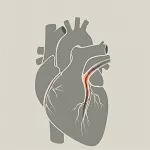
Smaller-diameter catheters (0.9 mm) may offer comparable or even better myocardial salvage and functional recovery than larger catheters despite delivering less total laser energy.