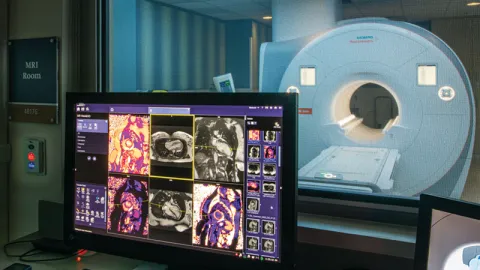
Selecting the optimal stress imaging modality remains important for risk stratification in patients with coronary disease, particularly when moderate to severe ischemia is identified at initial testing. In Journal of the American College of Cardiology: Cardiovascular Imaging, a comparative analysis from the ISCHEMIA trial evaluated the prognostic value of stress imaging modalities.
This analysis included 3,909 patients randomized in the International Study of Comparative Health Effectiveness With Medical and Invasive Approaches (ISCHEMIA) after site-based identification of moderate to severe ischemia. Stress testing was performed using stress cardiac magnetic resonance (CMR) or single-photon emission computed tomography (SPECT) or stress echocardiography (echo). Associations between ischemia and infarct extent and the primary composite outcome of cardiovascular death, nonfatal myocardial infarction, or hospitalization for unstable angina, heart failure, or resuscitated cardiac arrest were assessed over a median follow-up of 3.37 years.
Participants undergoing CMR were more likely to have severe ischemia than those undergoing SPECT or echo. Ischemia severity assessed by CMR was associated with four-year rates of the primary outcome, cardiovascular death or myocardial infarction, and nonfatal myocardial infarction, whereas SPECT or echo ischemia severity was not. Each additional ischemic segment on CMR was associated with a higher hazard of the primary endpoint. Among conservatively managed patients with no or mild ischemia, invasive referral and revascularization rates were lower after CMR.
These findings indicate stronger prognostic associations for stress CMR compared with SPECT or stress echocardiography in the ISCHEMIA trial.