Is Banner Display?
Off
Page Content
#ffffff

A new analysis in Journal of Heart and Lung Transplantation has highlighted the factors linked to atrial fibrillation (AFib) in patients with chronic thromboembolic pulmonary hypertension (CTEPH), a rare but treatable form of pulmonary hypertension (PH). While AFib is known to worsen outcomes in PH broadly, its role in CTEPH has been less clear.

The study, based on data from 784 adult CTEPH patients across Polish PH centers, found that 13.5% of patients had been diagnosed with AFib at the time of registry enrollment. Individuals with AFib were more likely to have additional health issues, particularly chronic kidney disease and arterial hypertension.

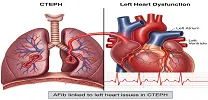
The study identified two independent predictors of AFib in this population, i.e., elevated pulmonary artery wedge pressure (PAWP) (odds ratio [OR] 1.27 per mmHg) and increased left atrial (LA) area (OR 1.279).

While AFib was associated with higher levels of NTproBNP, it did not independently predict mortality in these patients during follow-up.
Anonymous user
On
Authenticated user
On
Premium
On
Paid / Sponsored
On
Key highlights
  • 13.5% of CTEPH patients had AFib at the time of registry entry.
  • AFib was more common in patients with hypertension and chronic kidney disease.
  • PAWP and the LA area were the only independent predictors of AFib.
  • Findings point to a dominant role of left heart dysfunction in arrhythmia development.
  • AFib was not an independent predictor of mortality, despite association with higher NTproBNP levels.
Source

Braksator M, Kurzyna M, Kopeć G, et al. Hemodynamic, echocardiographic, and demographic profiles of patients with chronic thromboembolic pulmonary hypertension and atrial fibrillation: A multicenter cohort study. J Heart Lung Transplant. 2025;44(8):1239-1248. Doi: https://doi.org/10.1016/j.healun.2025.03.020 

Thumbnail
AF and PH
Speciality
Currency
Short Description

A study highlighted the factors linked to atrial fibrillation in patients with chronic thromboembolic pulmonary hypertension.

Release Date
Is Paid
0