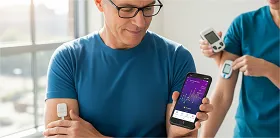
A large real-world Canadian study published in Diabetes Medicine has found that adults with type 1 diabetes who switched from intermittently scanned continuous glucose monitoring (isCGM) to real-time CGM (rtCGM) experienced significant improvements in blood sugar control and glucose monitoring metrics, with no adverse effects on body weight, insulin dose, or hypoglycemia risk.
Researchers analyzed data from the LMC Diabetes Registry on 136 adults (mean age 43 years, mean diabetes duration 20.9 years, baseline HbA1c 8.2%) who transitioned to rtCGM. At 6–12 months after the switch, HbA1c significantly dropped by an average of 0.6% (7 mmol/mol).
In a propensity score–matched analysis of 84 patients in each group, those who switched to rtCGM showed a greater HbA1c reduction than those using isCGM (mean difference 0.5%, p = 0.002).
They also had more time in target range, less time above or below range, and lower mean glucose levels. No significant differences were found in hypoglycemic event rates, body weight, or total daily insulin dose.