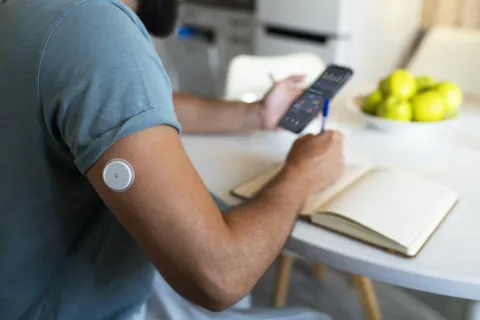
Sustained use of continuous glucose monitoring (CGM) may reflect long-term changes in glycemic metrics and healthcare utilization in routine care. A retrospective real-world cohort study published in Primary Care Diabetes evaluated outcomes over 36 months in individuals with type 1 diabetes mellitus (T1DM) using CGM.
The analysis included 314 individuals with T1DM who initiated CGM and maintained continuous use for three years. Clinical, laboratory, and CGM-derived parameters were assessed at baseline and at approximately 12, 24, and 36 months. Outcomes included glycated hemoglobin (HbA1c), time in range, hypoglycemia exposure, glycemia risk index, insulin dose, body weight, and diabetes-related hospitalizations.
Median HbA1c decreased from 8.5% at baseline to 7.8% at 12 months and remained at 7.7% at both 24 and 36 months (p<0.001). Time in range increased from 57% at 12 months to 68% at 24 months, followed by 63% at 36 months. Severe hypoglycemia exposure (% time below range <54) remained minimal, while hypoglycemia events declined from 5 to 4 per 28 days. Median glycemia risk index improved from 53.4 at 12 months to 38.2 at 24 months and increased to 47.0 at 36 months.
Median insulin dose declined from 1.3 IU/kg/day at baseline to 1.0 at 12 and 24 months, and 1.1 at 36 months. Body weight decreased from 69 kg to 67 kg at 12 months and remained stable thereafter. Diabetes-related hospitalizations declined from 6.1% at baseline to 1.9% at 36 months (p=0.009). These findings reflect changes in glycemic control, safety parameters, and healthcare utilization over prolonged CGM use in routine clinical practice.