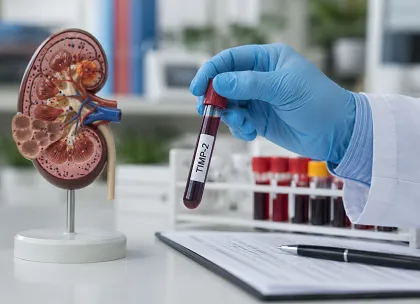
A prospective single-center cohort study published in the BMC Cardiovascular Disorder evaluated the relationship between serum tissue inhibitor of metalloproteinases-2 (TIMP-2) levels and renal outcomes in patients with ST-elevation myocardial infarction (STEMI) undergoing urgent coronary angiography with or without percutaneous coronary intervention (PCI).
The study enrolled 88 consecutive STEMI patients. Routine laboratory testing was performed at admission and at 48 hours, while serum TIMP-2 concentrations were measured 2 hours after the procedure using a standardized sandwich enzyme-linked immunosorbent assay.
Early contrast-induced acute kidney injury (CI-AKI) was defined using conventional creatinine-based criteria within 48 hours. Ninety-day chronic kidney disease (CKD) was defined as estimated glomerular filtration rate (eGFR) <60 mL/min/1.73 m² or persistent creatinine elevation at follow-up. Early CI-AKI occurred in 6 of 88 patients (6.8%), whereas 15 patients (17%) developed 90-day CKD, indicating a greater burden of delayed renal dysfunction beyond the acute post-procedural period. Median 2-hour serum TIMP-2 concentration was 1.20 ± 0.38 ng/mL.
TIMP-2 demonstrated modest correlations with creatinine and urea levels and remained independently associated with higher 90-day creatinine in multivariable linear regression analysis (B=+12.0 µmol/L per 1-ng/mL increase; P=0.016). In logistic regression models, TIMP-2 showed a borderline association with 90-day CKD (odds ratio approximately 6.38; P=0.056), while older age was identified as a significant predictor.
These findings suggest that delayed renal dysfunction after STEMI may occur more frequently than early creatinine-defined CI-AKI. TIMP-2 may provide additional information regarding early tubular stress, although its isolated predictive performance for long-term CKD remained limited.